BRAND REVIEWS · 7 MIN READ
Boat Trader Review: Listing Costs & Buyer Checks
Nov 04, 2026 · 16K views
In this article
- Boat Trader review: understand the marketplace
- Search by the use you actually expect
- What is free and what sellers pay for
- Duration, renewal and cancellation
- Choose the correct advertising route
- Build a listing that answers useful questions
- Buyer checks remain separate from the listing
- Compare the full practical commitment
- Using a Dealnory offer
- Our assessment
Boat Trader review: compare listing costs, renewal terms, search tools and buyer checks before using this US marketplace to sell or find a boat.
Boat Trader is a marketplace for discovering boats and connecting with sellers. That makes it useful to both buyers and owners, but the service being purchased is easy to misunderstand. A seller buys advertising exposure; a buyer researches listings and then deals with the seller. Neither role should assume the platform has inspected the vessel or guaranteed the transaction.
This review draws on official Boat Trader and Boats Group information checked on November 4, 2026. We have not paid for a listing, contacted a boat seller or completed a purchase. Dealnory may earn a commission through our links at no extra cost to you. Check Boat Trader offers on Dealnory while comparing the service and its current conditions.
Boat Trader review: understand the marketplace
The US-focused platform includes private owners, dealers, brokers, manufacturers and marine businesses. Its catalogue spans new and used powerboats, sailboats and personal watercraft, with additional sections for engines, trailers and marine services. Boats Group owns the platform.
Boat Trader says it does not own or directly sell the boats advertised. A listing is a route to the relevant seller, rather than a retail product stocked by Boat Trader. This distinction matters when asking who sets the price, describes condition, receives payment and handles any dispute about the vessel.
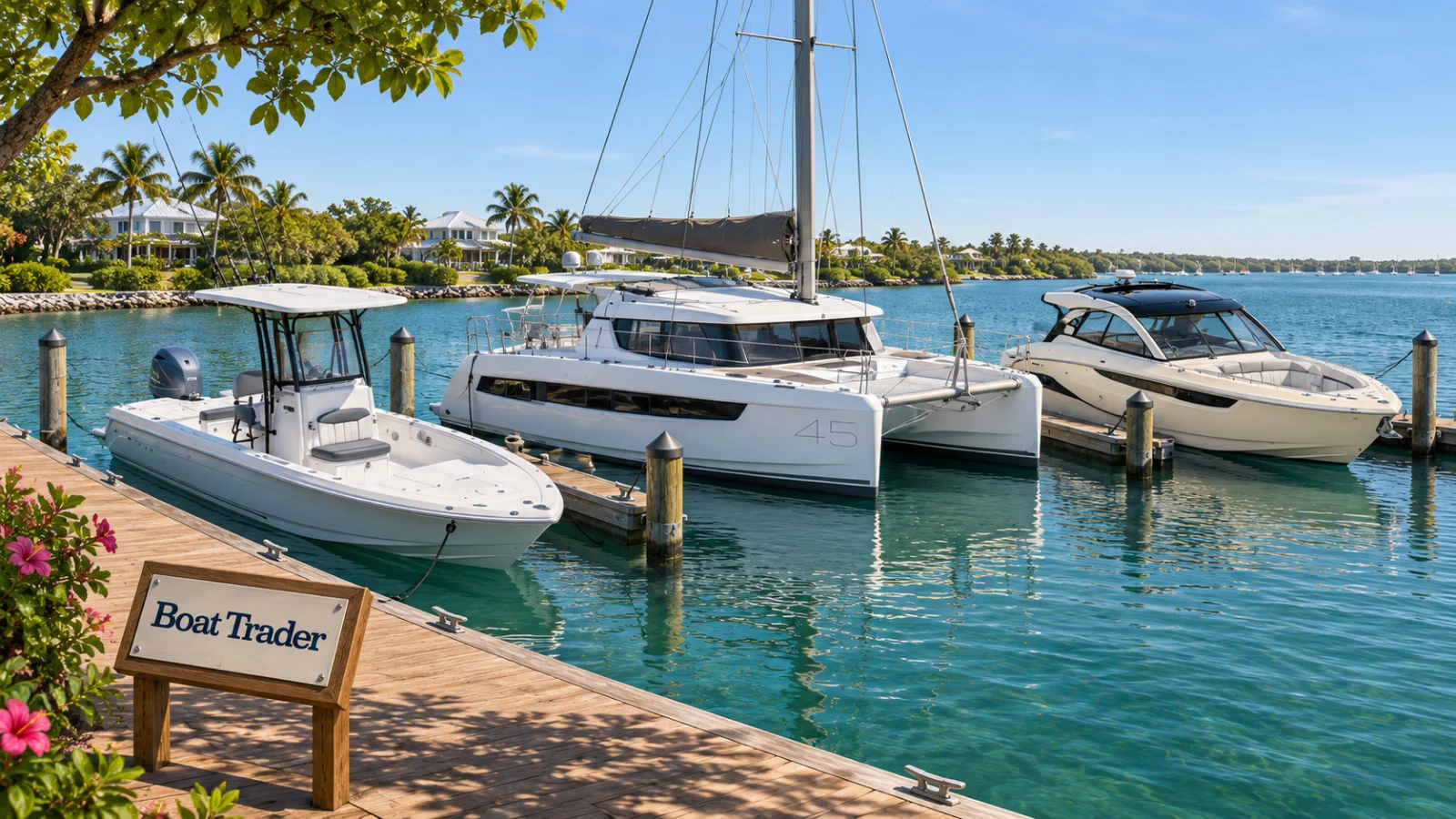
Our cover combines several vessel types referenced from official Boat Trader category photography in an illustrative natural marina setting. It does not show a Boat Trader-owned marina or identify boats that we have inspected. The platform's current listings, rather than the cover, determine actual availability.
Search by the use you actually expect
The search tools include type, make, model, price, location, year, length, engine type, fuel and condition filters. Start with a practical area and requirements, then broaden deliberately if the local selection is limited. A distant listing adds viewing and transport questions even when its advertised price looks appealing.
For your own comparison sheet, record the exact model and year, location, asking amount, stated engine hours and included equipment. Mark missing information instead of silently assuming it is standard. Two boats sharing a model name can differ in specification, maintenance history and accessories.
A useful shortlist should answer why each candidate is relevant. For example, one may be nearby enough to view easily while another may include equipment you would otherwise need to source. This is more informative than ranking only by the lowest advertised figure. Asking prices also do not establish the amounts boats eventually sell for.
What is free and what sellers pay for
The selling page says browsing, searching and contacting sellers are free. Private sellers pay an upfront listing fee, with the quote depending on factors such as boat location and asking price. It advertises no sale commission. We did not complete the listing process or obtain a personalised package quote.
For that reason, this review does not present one universal listing price. Get the package amount for your actual boat and check what it buys: advertising duration, placement, included media, any upgrades and which sites display the advert. A flat fee can still represent poor value if the package does not suit the selling plan.
Separate the platform charge from other sale-related expenses. Photography, preparation, storage, transport or professional help are different decisions, even if the advertising page describes a commission-free sale. Build a budget around the services you intend to use rather than treating zero commission as zero overall cost.
Duration, renewal and cancellation
The Boats Group advertising agreement ties the service period to the package selected and starts it when full payment is processed. It says refunds are not payable after the service has commenced. The agreement also provides for an optional card auto-renewal arrangement, charged before the current period expires.
This deserves attention alongside the sales page's emphasis on one upfront listing fee. Confirm whether your chosen package renews, the renewal amount and date, and how to stop it. The agreement describes contacting customer service to end auto-renewal; retain confirmation rather than assuming removal of a listing also resolves every billing setting.
Before paying, ask what happens if the boat sells early, remains unsold or needs the advert paused. These are different circumstances. Keep the package description and receipt together so you can compare the service delivered with the duration and features actually purchased.
Choose the correct advertising route
The current agreement distinguishes a private-owner route from professional advertising and sets eligibility and listing limits. Private-owner eligibility concerns adults personally owning used boats; businesses and higher-volume advertisers need the appropriate route. Boat Trader advertisements under this agreement concern boats located in the United States.
For a company-owned vessel, a boat advertised on someone else's behalf or a more complex inventory, establish eligibility with the provider first. Do not choose a cheaper route by assuming that the everyday meaning of private seller matches the contractual definition.
The agreement requires accurate location, availability and purchase price, and one advertisement concerns one vessel. Prepare the information before paying so the advert is ready to work during its paid period. If a field does not fit the circumstances, ask for guidance instead of inserting a placeholder likely to mislead a buyer.
Build a listing that answers useful questions
Describe the boat's present condition in concrete terms. Separate equipment currently included in the sale from upgrades shown in older photographs. Dates matter for service records, repairs and replacements. A statement such as recently serviced is less helpful than an accurate dated description supported by available records.
Use a balanced set of current photographs showing the overall vessel and relevant details. Include areas a serious viewer will want to understand, while respecting personal privacy in documents and photographs. The aim is to reduce avoidable uncertainty before an enquiry, not to conceal every sign of normal use.
Plan how enquiries will be handled. A prompt, consistent answer supported by the same information in the advert helps keep conversations clear. If the condition, included equipment or availability changes, update the listing. These are sensible advertising practices, not a promise that a particular number of enquiries or a sale will result.
Buyer checks remain separate from the listing
Boat Trader's security centre states that the platform does not provide buyer protection, escrow, inspections or certification of advertised boats. It also warns against buying only from photographs and recommends verifying the seller and inspecting the vessel. A familiar marketplace name is therefore not a substitute for checking the particular transaction.
Be especially cautious about claimed platform payment instructions, an unexpectedly low price, overpayment requests or pressure to use a particular external history-report service. The security guidance highlights such patterns. Independently check any service or instructions before sending money or sensitive information.
For your own decision process, keep an unresolved-questions list with the shortlist. Identity, authority to sell, actual vessel condition, included equipment and the proposed transaction process deserve clear answers. The appropriate professional inspection and paperwork checks depend on the vessel and circumstances; this article does not establish a boat's seaworthiness or provide personalised legal advice.
Compare the full practical commitment
A boat's advertised price is only one part of ownership planning. Consider the costs you would need to investigate for your location and intended use, including storage, maintenance, insurance and moving the vessel. We have not quoted those services here because they vary substantially with the boat and circumstances.
Similarly, a loan calculator or an advertised financing option is not an approval or a personalised offer. If financing is relevant, compare the actual written terms from the provider. Keep the choice of boat and the method of paying for it clear enough that a monthly figure does not hide the total commitment.
Using a Dealnory offer
Visit Boat Trader through our affiliate link to examine current packages and listings. Check which service an offer covers, whether it is limited to new listings and whether upgrades or renewal periods are excluded. Do not assume a listing promotion discounts the boat itself.
Judge the saving against the package you would otherwise select. Paying less for an unsuitable duration or an unnecessary upgrade does not automatically improve the sale plan. Keep the current offer conditions with the package quote and confirm the final amount before payment.
Our assessment
Boat Trader is worth comparing when you want a broad US boating marketplace, detailed search filters or a paid advertising route for an eligible boat. The most useful first step is to decide whether you are evaluating search convenience as a buyer or advertising value as a seller.
For sellers, the key questions are package price, duration, renewal, eligibility and the quality of the listing you can prepare. For buyers, the listing is a starting point for seller verification and vessel-specific checks. We would assess those answers before giving weight to audience claims, a discount headline or the apparent attractiveness of an asking price.