BRAND REVIEWS · 7 MIN READ
Cyseekin Bike Review: Models, Fit & Return Costs
Nov 04, 2026 · 9.5K views
In this article
- Cyseekin Bike review: choose the format first
- Folding does not remove the lifting question
- Fit, load and daily practicality
- Battery capacity is different from tested range
- Configuration and road-use claims
- Delivery is EU-focused with exclusions
- Returns can carry substantial charges
- Warranty: parts and workshop labour differ
- Compare the final package and support plan
Cyseekin Bike review: compare C10, S10 and C20 fit, battery claims, EU delivery, return charges and warranty limits before choosing a commuter e-bike.
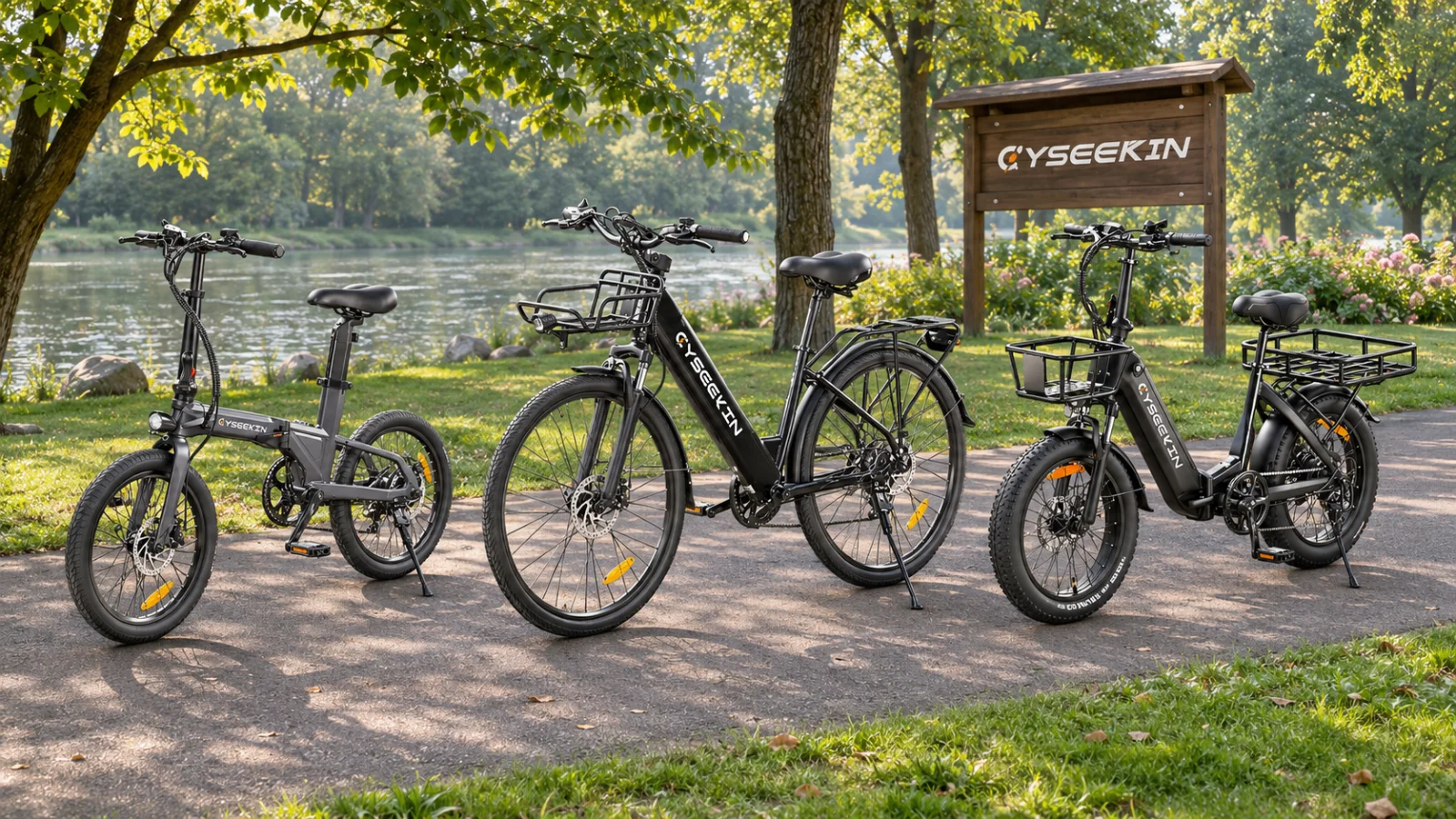
Cyseekin offers several everyday e-bike formats that should not be treated as the same bicycle with different names. The compact folding C10, larger-wheeled S10 city bike and small-wheel C20 mini-cargo design address different storage and carrying needs. The right comparison starts with how the bike will be used and handled when assistance is switched off.
This desk review examines official Cyseekin Bike pages checked on November 4, 2026. We have not ridden, weighed, folded or range-tested these bikes. Dealnory may earn a commission through our links at no extra cost to you. Check Cyseekin Bike offers on Dealnory while comparing the exact model and destination terms. This review concerns cyseekinbike.com e-bikes, not the separate mobility-scooter storefront.
Cyseekin Bike review: choose the format first
The C10 is the compact folding option. Its current German listing states a 250 W motor, 345.6 Wh battery, approximately 18.6 kg weight and 20 × 2.125-inch tyres. It also describes a two-step fold in eight seconds and Shimano seven-speed gearing. Those are manufacturer specifications and timing claims, not measurements we reproduced.
The S10 is presented as a non-folding city model with 26-inch wheels and a 499.2 Wh battery. The product comparison gives approximately 27.9 kg and mechanical disc brakes. A conventional city-bike layout may suit someone storing it at ground level, but wheel size alone does not establish comfort, handling or suitability for a rider.
The C20 mini-cargo page describes a low-step folding bike with 20 × 3-inch tyres, a removable battery of about 748 Wh, a 250 W motor and 60 Nm claimed torque. Basket and rack configurations vary by package. Confirm what is included in your selected option rather than assuming the most fully equipped photo is the base purchase.
Folding does not remove the lifting question
A folding mechanism addresses the shape of the stored bike, while weight determines what you can comfortably lift. Measure the space in your hallway, car or workplace and ask for the exact folded dimensions. Include any basket, rack or accessory that remains attached in the proposed arrangement.
A quoted folding time is less informative than whether the folded bike fits the place you need to put it. Consider the movements required to carry it through doors, upstairs or onto permitted public transport. We cannot verify how manageable any model feels in those situations.
Compare the actual frame and folding arrangement, not only a product-category label. Ask whether a battery must be removed for your intended handling method and follow the manual. Do not assume an e-bike can be lifted by any convenient-looking cable, rack or folding component.
Fit, load and daily practicality
The C10 comparison table lists a recommended rider-height range of 150–190 cm and a 120 kg maximum load, while the C20 table gives 155–190 cm and a 150 kg load limit. Treat these as starting specifications. Ask what the load includes and how rack limits differ from the total bike limit.
Rider height alone does not establish reach, standover or comfortable saddle position. Obtain the geometry and adjustment limits relevant to your proportions. A low-step frame may change how you mount the bicycle, but it does not replace checking the actual fit.
For carrying shopping or work equipment, record the separate front and rear carrier ratings and which mounting accessories are approved. A basket appearing in an image does not establish permission to transport a passenger. Compare your real load plan with the manufacturer's instructions before selecting a cargo package.
Battery capacity is different from tested range
The listed battery capacities give useful technical distinctions, but the advertised maximum distances are not results from our own routes. Actual distance can depend on terrain, assistance setting, rider and cargo weight, temperature, tyre condition and battery age. Leave a sensible margin rather than planning a necessary return trip around the highest marketing figure.
Wh describes stored energy, while a motor's W rating describes power. The two numbers should not be ranked as though they mean the same thing. A larger battery may support a different usage pattern, but it can also come with a different bicycle format and weight.
Check whether the battery is removable, where it can be charged, the supplied charger and replacement availability for the exact version. Use the manufacturer's matched charging equipment and instructions. We have not independently verified a battery certification, charge time or long-term capacity retention.
Configuration and road-use claims
Cyseekin advertises EU compliance and German-road-use language on its pages. We have not independently inspected a delivered bike or its documentation. Ask for the declaration and manual matching the exact model, especially when a listing includes accessories or controls that could alter the supplied configuration.
Confirm the rules that apply where you intend to ride rather than assuming a website's country-specific claim applies everywhere. This article does not provide a legal determination about a modified bike. Do not alter assistance settings or install a control based on an assumption that its presence in the accessories catalogue makes every use permitted.
Before riding, follow the assembly and inspection requirements in the current manual. Pre-assembled does not mean every component can be ignored on arrival. If you cannot perform a required check competently, establish appropriate local assistance and its cost before the purchase.
Delivery is EU-focused with exclusions
The shipping policy describes dispatch from Germany and free delivery to listed EU destinations. Its main zone lists two to eight business days, with three to eight for a second group. Specific islands, overseas territories, parcel lockers and PO boxes are excluded, so verify the exact postcode.
The policy separates preparation and transit and provides tracking after dispatch. Treat the quoted schedule as an estimate tied to stock and destination, not a guaranteed arrival for every order. We have not tested delivery speed or whether a particular model is physically available at the warehouse.
Inspect the delivery and preserve packaging. The warranty page asks for transport-damage contact within three days, with a later reporting exclusion also stated. Report a problem promptly and retain photographs, rather than relying on the longest deadline mentioned elsewhere.
Returns can carry substantial charges
The return policy offers free cancellation within twelve hours of ordering. After dispatch, cancellation or refusal can incur €200. For a non-defective bike, it lists €200 return shipping within fourteen days; days fifteen to thirty add a 20% restocking deduction. These are provider policy statements, not a legal assessment of statutory rights.
It also excludes bikes above 16 km of recorded use, heavily used or damaged units, missing packaging or accessories, and certain separate batteries or custom items. Contact support for authorisation and the confirmed return address before shipping anything.
On an illustrative €1,000 eligible non-defect return during days fifteen to thirty, a 20% deduction plus €200 would total €400. That arithmetic shows why a trial can be costly; obtain a written calculation for your case. Defect claims follow different provisions and should not be confused with changing your mind.
Warranty: parts and workshop labour differ
The warranty page gives two years for named core items such as motor, battery, charger, display, frame and fork, with one year for various other components. It describes replacement parts and outbound part shipping, while workshop labour requires prior written approval to be covered.
Wear items, misuse and unauthorised work on core systems are among the exclusions. Sending a part for inspection can also involve customer-paid shipping under the stated conditions. Ask how a claim would be handled in your area and which local workshop, if any, is authorised to carry out the work.
A parts warranty is not the same as an on-site maintenance plan or free whole-bike return. The policy says its voluntary cover is additional to applicable consumer rights. We have not tested a claim and cannot rate the practical repair time or parts availability from the written warranty alone.
Compare the final package and support plan
Visit Cyseekin Bike through our affiliate link to inspect current eligible offers. Record the exact model, colour, included equipment, final tax and delivery treatment, warranty and return conditions. Promotional accessory values should not be counted as cash saved unless you wanted those accessories anyway.
Our assessment is that Cyseekin's different formats are worth comparing for EU shoppers who can verify fit, storage, load requirements and local support. The C10's compact focus, S10's city layout and C20's carrying options give distinct starting points. We cannot declare a best-riding model or promise range without testing; the decision should rest on the exact specification and a realistic after-sales plan.