SPORT & OUTDOORS · 5 MIN READ
GardePro Review: Cellular vs WiFi Trail Cameras
Nov 04, 2026 · 14K views
In this article
- GardePro review: three ways to get your footage
- Cellular or WiFi: start with coverage and how often you visit
- Power, placement and protecting your camera
- Features to compare between models
- Who GardePro suits, and who may want something else
- Our verdict: choose the connection, then the camera
- Current offers and a sensible final price
GardePro review: how the cellular, WiFi and standard trail cameras differ, what coverage, power and data plans mean for your setup, and the current offers before you buy.
A trail camera is only as useful as the footage you actually get to see. Hunters scouting a stand, landowners watching a gate and wildlife fans tracking a fox all share the same problem: walking out to swap SD cards disturbs the very area you want to observe. GardePro builds its range around different ways of getting those images back to you, and choosing the right type matters more than chasing the highest number on the box.
This desk review is based on GardePro's published product information and the offers listed on Dealnory, checked on November 4, 2026. We have not tested GardePro cameras in the field. Dealnory may earn a commission through our links at no extra cost to you. Check current GardePro offers once you know which camera type suits your land.
GardePro review: three ways to get your footage
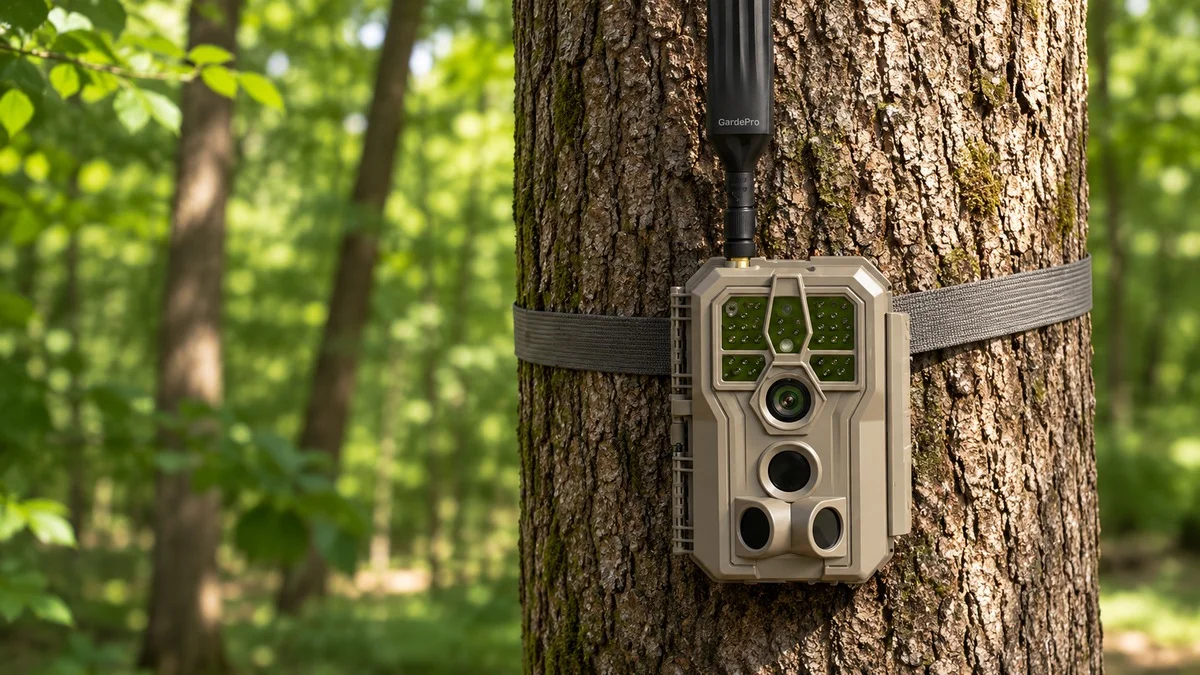
Cellular trail cameras, such as the X66 3.0 Ultra-AI, X66 3.0 Pro-AI, X66 Pro, X60P Live Max and X80 Pro, send images over a mobile network so you can check activity from home. WiFi models, including the E9 3.0 Pro, E8 3.0 Pro, E6 2.0 Pro and A80 Pro, let you download clips to your phone when you are within range, while the Link 1.0 is designed to extend WiFi connectivity for more remote setups.
Non-cellular cameras such as the A3S, A60 4K and E5S record to a memory card, which keeps running costs down but means you collect footage in person. GardePro also sells an M21 thermal monocular, data plans, its companion app and a long list of accessories, from SD cards and antennas to solar panels, mounts and security boxes.
Cellular or WiFi: start with coverage and how often you visit
A cellular camera only works where there is a usable mobile signal, so check coverage at the exact spot you plan to mount it, not just at the road or the cabin. You also need a data plan, which adds an ongoing cost to the purchase price. In return, you can see activity within minutes and avoid trips that disturb the area.
WiFi cameras suit people who already visit the site regularly and simply want to skip removing the card. You still need to be close enough to connect, but there is no monthly plan. A standard card-based camera is the simplest and most affordable option when you are happy to collect footage on your own schedule.
Power, placement and protecting your camera
Battery life depends heavily on how many images and videos the camera captures and how often it transmits them. For cameras left out for weeks, a compatible solar panel can reduce battery changes, and a mount that lets you angle the camera correctly will cut down on empty frames triggered by moving branches.
On open or shared land, a security box and a discreet position help reduce theft and tampering. If you are using a camera for property monitoring rather than wildlife, check local rules about recording on land or near paths that other people use, and point the camera only where you have the right to record.
Features to compare between models
Within each family, models differ in image and video resolution, detection features, connectivity and accessories included. Some cellular models advertise AI features to help sort what the camera sees, while others focus on live view or simpler setups. Read the specification list for the exact model rather than assuming the whole series behaves the same way.
Think about what you will actually review. If you mostly want to know when deer move past a feeder, still images and good night performance matter more than high-resolution video. If you are documenting behavior or monitoring a gate, video quality and trigger speed may be the deciding factors.
Who GardePro suits, and who may want something else
GardePro is a good fit for hunters scouting several locations, landowners who want to monitor remote gates or outbuildings, and wildlife enthusiasts who want regular images without disturbing an area. The choice of cellular, WiFi and card-based models makes it possible to mix camera types across a property.
It is a weaker fit if your location has no mobile signal and you still want remote alerts, if you do not want an ongoing data plan, or if you need a full home security system with professional monitoring. In those cases, a standard trail camera or a dedicated home security product may be more appropriate.
Our verdict: choose the connection, then the camera
GardePro makes the most sense when you start with how you want to receive footage. Choose cellular if signal is available and remote alerts are worth a data plan, WiFi if you visit often, and a card-based camera if you want the lowest running cost. Then compare models within that family on image quality, detection and power options.
Buying from the official shop adds a two-year warranty and a money-back window, which is reassuring for a device that will spend months outdoors.
Current offers and a sensible final price
GardePro currently gives newsletter subscribers 10% off a first purchase and ships free worldwide on orders over $50. The official shop is running a Black Friday sale on trail cameras, alongside a limited-time deal on an X66 Pro two-pack for $89.99.
Orders placed through the GardePro Shop include a two-year warranty and a 30-day money-back guarantee. For cellular models, remember to add the cost of a data plan when comparing totals. Check the latest GardePro coupons and offers on Dealnory to see what is active today.
Coupon codes, deals and availability depend on GardePro's current terms and may change or expire.
Sources and disclosure: GardePro official product and shop pages and the offers listed on Dealnory, checked November 4, 2026. Editorial assessment of published information, not a hands-on test. Dealnory may earn commission from qualifying purchases. Images are editorial illustrations.