HOME & LIVING · 7 MIN READ
Commomy Review: Peel-and-Stick Tiles & Limits
Nov 04, 2026 · 8.4K views
In this article
- Commomy review: what is the product?
- Where peel-and-stick tiles make the most sense
- Surface preparation controls the result
- Calculate coverage with cutting waste
- Water and heat: avoid broad assumptions
- Appearance, samples and removal
- Delivery and returns: the details change the value
- Pros and trade-offs
- Is a Commomy offer worth buying?
- Commomy review: the verdict
- Frequently asked questions
- Are Commomy stone-look panels real stone?
- How much extra material should I order?
- Can I put standard wall panels inside a shower?
- Can I return leftover opened packs?
Commomy review: compare peel-and-stick wall tiles, surface preparation, coverage, heat limits and return costs before starting a DIY room makeover.
A peel-and-stick wall finish can make a tired corner look different without the labour of traditional tiling. The attraction is clear, but adhesion, alignment and realistic material expectations determine whether it is a good purchase. Commomy is most relevant to someone planning a decorative change on a suitable existing surface.
This review assesses published product details and policies checked on November 4, 2026. We have not tested adhesion, removal or long-term wear ourselves. Dealnory may earn a commission through our links at no extra cost to you. Check current Commomy coupons and deals after identifying the product and quantity your project needs.
Commomy review: what is the product?
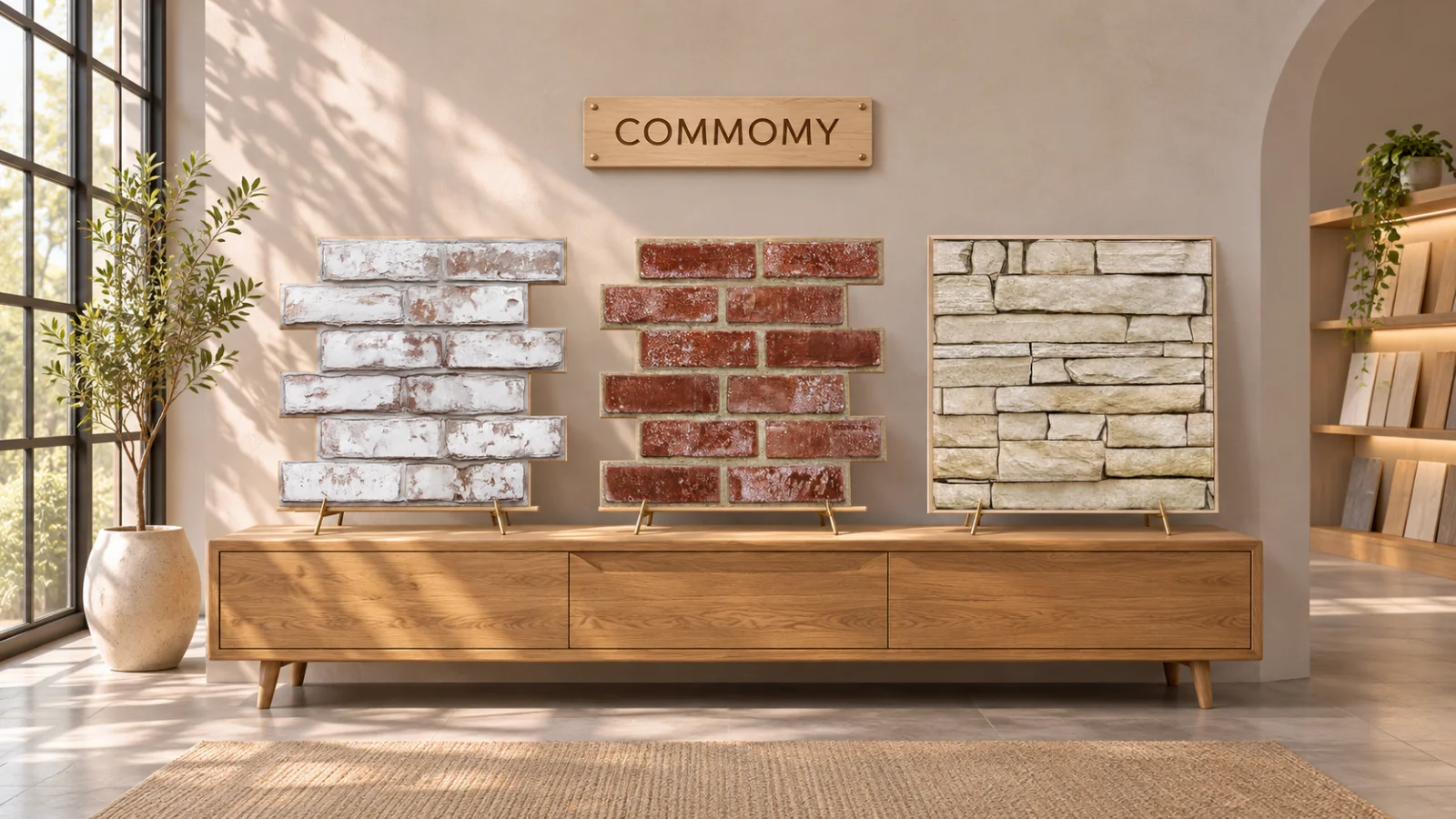
Commomy offers decorative wall panels, backsplash products and tile stickers. These are separate categories with different intended uses. Its 3D Irregular Flagstone wall tile, for example, is listed as PVC and EVA with a matte surface, supplied in packs of ten sheets. The advertised effect is stone-like texture, not actual stone masonry.
That distinction matters when judging price and finish. Lightweight decorative panels can be easier to cut and handle, but should not be assessed as though they have the same properties as ceramic, stone or a complete waterproof wall system. Choose the product because its intended application fits your project rather than because a photo resembles an expensive material.
Where peel-and-stick tiles make the most sense
A small accent wall, a clean flat splashback area approved for the selected product, or a decorative section of a room can be practical places to consider. A manageable area also gives you fewer corners and cutouts to align. Start by describing the surface, moisture exposure and temperature conditions rather than choosing a pattern first.
For a heavily damaged wall, the preparation may outweigh the convenience of the panels. Covering loose paint, damp patches or uneven material does not fix the underlying problem. If the surface needs repairs, include them in the project before deciding how much time and money self-adhesive tiles will save.
Surface preparation controls the result
The manufacturer's installation guidance calls for clean, dry, smooth surfaces without dust, grease or peeling paint. Its FAQ lists compatible examples such as sound painted drywall and flat sealed surfaces. Some product copy mentions lightly textured walls, while the broader guide discourages heavily textured surfaces. Confirm compatibility with the exact product and your wall finish.
Cleanliness alone is not the same as stability. Check whether the paint is firmly attached, whether grout lines create an uneven base and whether a coating leaves a low-adhesion finish. Ask the seller about an uncertain substrate before ordering a whole room. A sample is a useful way to assess the appearance and, where the seller permits, a small concealed adhesion test.
Plan your starting line using a level instead of assuming a worktop or ceiling is perfectly straight. Dry-lay a few sheets before removing the backing. Consider how a repeated pattern will meet at corners, edges and the end of a run. A small initial alignment error becomes more obvious as the area grows.
Calculate coverage with cutting waste
The Irregular Flagstone listing specifies approximately 9.7 square feet of coverage per ten-sheet pack and includes a calculator option for ten percent waste. Use the actual coverage for your selected design; sheet count alone is not enough to compare different products.
For an illustrative 30-square-foot project, adding ten percent gives 33 square feet. Dividing by 9.7 produces about 3.4 packs, so you would round up to four whole packs. This is a planning example, not a guarantee that four packs fit every layout. Complex patterns, many outlets and narrow strips can increase cutting losses.
Measure each section separately and sketch the layout. Check whether offcuts can be reused without reversing the pattern or creating an obvious seam. Ordering the needed material together can also reduce the risk of visible colour differences between batches. Keep a small amount of matching spare material for later repairs if the budget permits.
Water and heat: avoid broad assumptions
Water-resistant decorative panels should not automatically be treated as shower waterproofing. The product guidance we checked says not to install the standard wall tiles inside showers or in constant-water areas, even though some general marketing language describes bathroom use. Ask for written confirmation about the exact range and location if water exposure is substantial.
The brand's FAQ specifies at least 12 inches, or 30 centimetres, between its tiles and a direct heat source or open flame. It excludes use inside fireplaces, on stovetops and in direct-flame areas. Follow the product instructions and the appliance's installation requirements; a decorative panel is not a heat shield or a substitute for required clearances.
For a bathroom or kitchen, identify the real exposure pattern. A wall near a sink, a wall regularly hit by shower water and a wall behind a burner are different environments. Matching a product to a room name is less useful than checking whether its adhesive and surface are approved for that particular spot.
Appearance, samples and removal
Commomy sells sample sheets, and the sample page notes that displayed colour can vary with screens and lighting. Use a sample to judge the texture from normal viewing distance and close up. Check the colour beside cabinets, flooring and painted walls under the lighting you will keep after the project.
For renters, easy installation does not prove damage-free removal. The brand says wall condition and paint quality can affect the outcome. Obtain any required landlord permission and avoid assuming that a marketing label overrides your lease or protects a fragile painted surface. Consider the time and cost of making the wall good again when assessing a temporary makeover.
Delivery and returns: the details change the value
The product pages we checked list one to two business days of processing and estimated transit of three to six business days for several main markets. Warehouse availability and destination can change the route. Confirm stock for your full quantity and allow time to inspect the order before scheduling installation.
The detailed returns policy is more restrictive than a short 30-day returns headline may suggest. It requires eligible goods to be unused, in original unopened packaging and suitable for resale. Samples, accessories and clearance promotion items are excluded. Customer-choice returns can involve return shipping and a 15 percent restocking charge; defective or incorrect goods follow a different process.
Ask for return instructions before mailing anything back. Inspect the order before installation and document damaged sheets immediately. Once you have cut, installed or otherwise used the material, you should not assume the ordinary return process remains available. Confirm the conditions for any large order, since the policy adds qualifications for bulk and sample-approved purchases.
Pros and trade-offs
Simpler decorative installation: self-adhesive sheets avoid the grout-and-mortar process of conventional tiling.
Several visual styles: textured and patterned options support different room designs.
Small-project planning: pack coverage and sample sheets help compare an accent-area upgrade.
Surface dependence: poor paint, contamination or unevenness can undermine the result.
Application limits: decorative wall tiles are not automatically suitable for showers, floors or direct heat.
Return costs matter: a change of mind may reduce the refund and require paid return shipping.
Is a Commomy offer worth buying?
Compare the total project cost, including whole-pack rounding, waste, samples, edge finishing and surface preparation. A low price per pack can become less compelling if your layout uses only part of several sheets or needs substantial wall repairs. Equally, a small suitable accent area may be an economical way to change a room's appearance.
Review current Commomy discount conditions on Dealnory, then compare the final cart against your complete material list. Avoid cutting the spare allowance merely to stay below a budget or adding an unrelated room just to reach a promotion threshold.
Commomy review: the verdict
Commomy is worth shortlisting for a decorative DIY project on a confirmed compatible surface. The strongest reasons to buy are a finish you have evaluated, an achievable layout and a total cost that includes preparation. The main reasons to pause are moisture or heat uncertainty, fragile paint and expectations of real stone or ceramic performance.
If the application and return conditions fit your needs, browse Commomy through our affiliate link. Check the current product instructions and package coverage before ordering.
Frequently asked questions
Are Commomy stone-look panels real stone?
The Irregular Flagstone product checked here is listed as PVC and EVA. Verify the material on each individual listing.
How much extra material should I order?
The listing offers a ten percent waste allowance as a starting point. More complicated cuts or patterns may require more; calculate whole packs from the usable coverage.
Can I put standard wall panels inside a shower?
Do not assume so. The standard-wall-tile guidance excludes constant-water areas and shower interiors. Ask about the exact product and installation.
Can I return leftover opened packs?
The policy requires eligible returns to be unused and in original unopened packaging. Confirm your circumstances with support before relying on a refund.