SMART HOME & APPLIANCES · 7 MIN READ
Cozeware Review: Mini-Split Costs & Limits
Nov 04, 2026 · 18K views
In this article
- Cozeware review: what is the range?
- Start with the exact model, not the brand headline
- Sizing: room area is only a starting point
- Voltage and installation planning
- Compare the full installed cost
- Energy claims and noise figures
- Controls, care and ongoing support
- Warranty and returns: read the detailed conditions
- Pros and limitations
- Cozeware review: the verdict
- Frequently asked questions
- Is a supplied installation kit the complete installed price?
- Can I choose the model from room area alone?
- Can I return the system after installing it?
- Does the savings percentage predict my power bill?
Cozeware review: compare mini-split models, sizing, voltage, installation costs, energy claims and return limits before choosing home heating and cooling.
A low equipment price can make a mini-split look like an easy upgrade for a bedroom, office or garage. The complete purchase is more involved: the system must suit the space, the electrical supply, the installation route and the support available afterwards. Cozeware deserves comparison on that installed basis rather than on the unit price alone.
This review assesses published specifications and store policies checked on November 4, 2026. We have not installed or performance-tested the systems. Dealnory may earn a commission through our links at no extra cost to you. Check current Cozeware coupons and offers once you know the model and installation scope your project needs.
Cozeware review: what is the range?
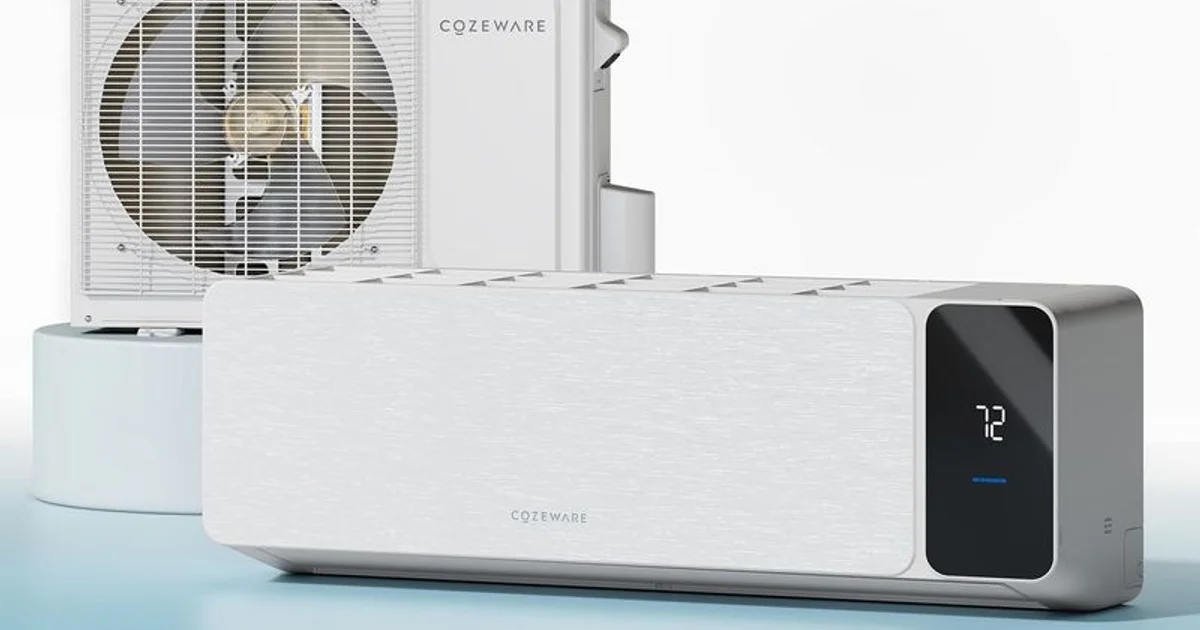
Cozeware markets ductless mini-split air conditioners with heat-pump heating. Its website lists Visio, Enduring and E-Save models in several capacities and electrical versions. These are installed systems with indoor and outdoor components, rather than portable appliances you simply move between rooms.
That format may suit a room or separate workspace that needs its own heating and cooling. It requires a suitable location for both units and the connections between them. If a property cannot accommodate an outdoor unit, or you do not have permission to make the necessary changes, establish that before selecting a capacity or applying a coupon.
Start with the exact model, not the brand headline
The Visio 12,000-BTU, 115-volt listing checked here advertises 20 SEER2 efficiency, app and voice controls, and a 16.4-foot line set. It is separate from the 230-volt version and from other series with different features. Match the product identifier and configuration to the quote you receive.
The brand also advertises features such as low-noise modes and automated energy-saving controls on selected products. Those claims are useful questions for comparison, not results we have verified in a home. Do not combine a noise figure from one series, a heating limit from another and a sale price from a third as though they describe one unit.
Sizing: room area is only a starting point
A coverage figure on a product page cannot describe every building. Ceiling height, insulation, windows, shade, climate and how the space is used can change the heating and cooling load. A sun-exposed workshop and a well-insulated bedroom with the same floor area may need different assessments.
Ask a qualified installer to evaluate the actual space and intended use. Describe whether doors will be open to adjacent areas, whether equipment adds heat and how cold the room needs to remain in winter. Choosing the largest available capacity is not a substitute for that assessment.
For heating, compare performance information at your relevant outdoor conditions rather than relying only on the fact that a unit has a heat-pump mode. If the system will be the main source of heat, discuss backup arrangements and service availability with the installer before purchase.
Voltage and installation planning
The catalog includes 115-volt and 230-volt choices. These are different electrical requirements, not simply names for a cheaper and more expensive version. Have the installer or electrician confirm the suitable supply and circuit arrangements for the exact model. Do not choose based only on the voltage printed on an existing nearby socket.
Also plan the location and route before ordering. The indoor position must work for airflow and servicing; the outdoor position needs appropriate access and clearances. The length and route of the connections can affect material and labour requirements. A supplied line set is helpful only if it suits the planned installation.
An installation kit does not by itself prove that a system is a complete do-it-yourself project or that every required component is included. Get a written list of supplied equipment and the extra work needed. Confirm any installation or documentation conditions attached to warranty coverage before starting.
Compare the full installed cost
Request a quote that separates the unit, installation labour, electrical work, mounting, drainage, any additional connection materials and any required approvals. Ask who is responsible for commissioning and responding if the completed system has a problem. A low online price may still be worthwhile, but it should be compared with an installed alternative on the same scope.
For illustration, a hypothetical $500 equipment purchase plus $800 of installation and related work totals $1,300. Saving ten percent on the equipment would reduce that total by $50, not $130. These are example figures, not a Cozeware installation quote. They show why a product discount should sit inside the full project budget.
Check the return implications before arranging work. If the unit is delivered late, damaged or in the wrong configuration, the installation appointment may need to change. Agree how the installer will handle that possibility rather than assuming equipment dispatch and installation dates will align automatically.
Energy claims and noise figures
SEER2 is a seasonal efficiency rating used when comparing cooling equipment. It is not a prediction of your individual electricity bill. Savings depend on what the new system replaces, local weather, thermostat settings, insulation and actual operation. Treat the website's percentage and monthly-saving claims as manufacturer marketing until their comparison assumptions match your situation.
Likewise, a low sound figure can refer to a particular mode or measurement condition. Ask whether the stated number concerns the indoor or outdoor unit and whether that mode provides the capacity you need. For a bedroom or a noise-sensitive property, consider placement and operating conditions as well as the headline specification.
We have not measured energy use, cooling output or sound. If those results are decisive, seek model-specific documentation and discuss the likely performance with the installer. A sensible decision can be made from clear specifications without pretending a published number is a tested household result.
Controls, care and ongoing support
App and voice controls may be convenient for a regular room, but check the exact model's requirements and how it works without the app. A straightforward remote can matter more than a rarely used connected feature. Ask about compatibility before assuming an existing smart-home routine will control every available function.
Plan ordinary upkeep and servicing access at the same time as installation. Follow the model's filter-cleaning and maintenance instructions, and confirm where replacement parts and service can be obtained. A feature-rich unit is less appealing if you cannot arrange support where it will be installed.
Warranty and returns: read the detailed conditions
The website advertises five years of parts coverage and seven years for the compressor. Confirm the detailed warranty for your exact model, including what is covered, required documentation and whether labour, diagnosis, shipping or refrigerant-related costs are included. A compressor warranty period alone is not a promise that every future service visit is free.
The returns policy describes a 30-day window for eligible new, unused, resaleable goods and explicitly excludes installed products. It also lists a 20 percent restocking charge for non-quality-related returns, with original-packaging and return-authorisation requirements. That makes selecting and checking the correct system before installation particularly important.
Inspect delivered components and identify problems promptly. The policy asks customers to report missing parts, damage or incorrect goods within 14 days. Contact support for the authorised return process rather than shipping equipment to an address copied from the carton. Confirm how the advertised return period applies to your particular circumstances.
Pros and limitations
Several configurations: the range provides different capacities, voltages and control options.
Published specifications: model pages provide a basis for comparing an installed system.
Room-focused heating and cooling: a ductless format can be relevant to an individual workspace or room.
Installation is part of the purchase: the equipment price does not establish the total project cost.
Performance depends on the building: coverage, savings and noise claims need context.
Installed-item return limits: the detailed policy is more restrictive than an unrestricted home trial.
Cozeware review: the verdict
Cozeware is worth shortlisting when an installer can match a specific model to the property and provide a clear total quote. Capacity, electrical compatibility and support should decide the shortlist before the sale price. A well-planned system may offer useful room-by-room comfort; an unsuitable configuration is not improved by a coupon.
Review current Cozeware offer conditions on Dealnory, then confirm the exact unit and purchase terms. If the project fits, browse Cozeware through our affiliate link.
Frequently asked questions
Is a supplied installation kit the complete installed price?
No. Confirm labour, electrical work, mounting, drainage and any additional materials or approvals separately.
Can I choose the model from room area alone?
Area is only part of the assessment. Ask an installer to consider the actual building, climate and use.
Can I return the system after installing it?
The published standard returns policy excludes installed products. Confirm the relevant warranty or defect procedure instead of assuming an ordinary return applies.
Does the savings percentage predict my power bill?
No. Your previous equipment, usage, electricity price and building conditions affect actual costs.