SMART HOME & APPLIANCES · 7 MIN READ
Euhomy Review: Ice Maker Types & Daily Use
Nov 04, 2026 · 11K views
In this article
- Euhomy review: start with the ice style
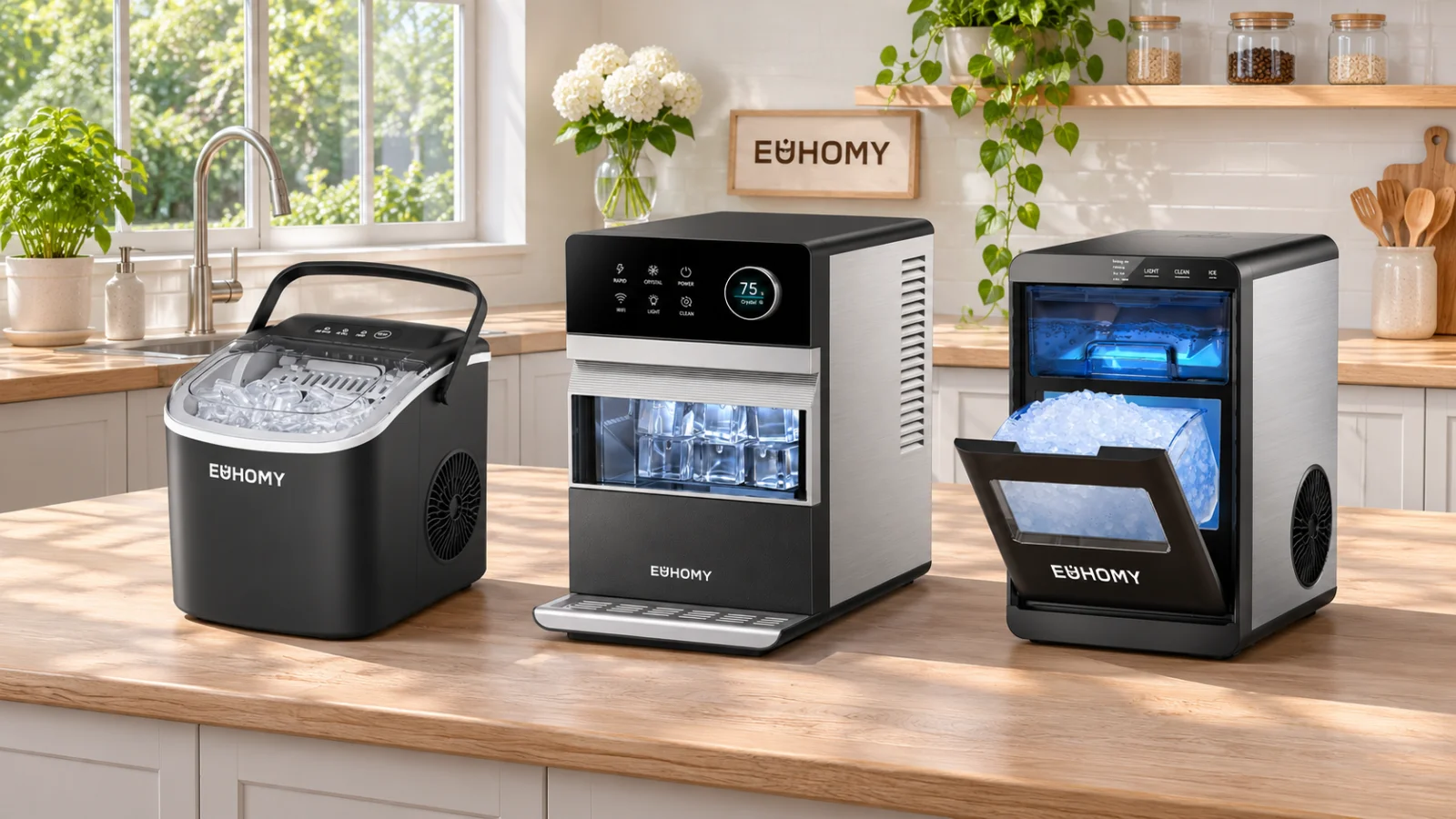
- Three formats worth distinguishing
- Daily production is different from ready-to-use storage
- Measure the working space, not just the footprint
- Water and cleaning are recurring jobs
- Noise and running costs remain untested
- Warranty coverage has conditions
- Returns: clarify the applicable version before buying
- Compare the complete purchase
- Euhomy review: the verdict
Euhomy review: compare ice styles, countertop space, batch output, cleaning needs, warranty coverage and return costs before choosing your home ice maker.
An ice maker is useful only if it produces the kind of ice you want at the times you need it. A large daily-output number can distract from a small first batch, an awkward refill routine or a machine that does not fit beneath your cabinets. Euhomy has several formats, so the decision begins with a specific use rather than a general brand rating.
This review evaluates published product information and shopping terms checked on November 4, 2026. We have not operated these appliances, measured their output or tested their noise. Dealnory may earn a commission through our links at no extra cost to you. Check current Euhomy coupons and offers after choosing an appropriate format.
Euhomy review: start with the ice style
The official catalog separates bullet, nugget, square, sphere, crescent and commercial ice makers. It also lists car refrigerators and beverage coolers. Those are different product categories, with different space and operating requirements; one attractive countertop model cannot represent the entire range.
Write down the drinks or tasks that motivate the purchase. Someone filling several water bottles needs a different comparison from someone preparing a few large cubes for evening drinks. Consider how often you need ice and whether preparing it ahead would be practical.
If you are replacing ordinary freezer trays, include those in the comparison. Trays require planning and freezer space, but an electric appliance adds counter space, cleaning and an additional item to maintain. A machine should solve a recurring inconvenience in your own routine.
Three formats worth distinguishing
Dart H1 is a bullet-ice model. Its product page advertises nine pieces in six minutes and up to 26 pounds per day. Those are manufacturer claims, not results measured here. Pearl L1 Plus is sold as a nugget-ice model, while Rock Plus is designed for large square ice and offers different operating modes and app control.
The practical question is which format you will use repeatedly. Do not buy a large-cube machine expecting the same production pattern as a small bullet machine. Equally, a fast first batch of small pieces does not establish that it can fill every guest's glass immediately.
Compare the exact suffix and generation. A Pro, Plus or other variant can have a different layout and feature set. Keep the product name and identifier in your comparison notes so a promotional bundle does not quietly change the machine you are evaluating.
Daily production is different from ready-to-use storage
A daily-output rating describes production over a period under the maker's stated conditions. It is not the quantity waiting in the basket at one moment. For a gathering, you need to understand the first batch, subsequent cycles and the amount the basket can hold.
Ask whether the chosen machine actively keeps finished ice frozen. Do not infer freezer-style storage from a photograph of a full basket. Read the manual's guidance about melting, recirculation and transferring finished ice, particularly if you plan to prepare it well ahead of serving.
For illustration, a household wanting a large quantity at seven o'clock should work backwards from its serving requirement. A machine that runs steadily throughout the afternoon may fit that routine; one started just before guests arrive might not. This is a planning example, not a prediction of a particular model's output.
Measure the working space, not just the footprint
Measure width, depth and available height where the appliance will operate. Then consider how the lid opens, where the cord goes and how you will refill or drain it. A unit can fit on paper while being inconvenient to use under a low cabinet.
Check the selected manual for ventilation clearances and placement instructions. A small kitchen may have a suitable storage spot but no suitable operating location. Decide whether the unit will stay out permanently or need moving between uses, and compare its listed weight accordingly.
Leave practical access for cleaning and emptying water. Positioning the machine where that routine is easy can matter more than a compact-looking product photograph. Do not buy first and assume a narrow gap beside another appliance will meet the operating instructions.
Water and cleaning are recurring jobs
Find out how the selected model takes water and what routine maintenance its manual specifies. A refillable countertop machine and a model intended for a more permanent installation should be evaluated separately. Confirm any required connections before ordering accessories.
A self-cleaning button does not settle every care question. Read what the cycle actually does, which components need manual attention, what cleaning products are approved and how the unit is drained afterwards. Follow the model's instructions rather than adapting a recipe intended for another appliance.
Estimate whether you will maintain it at the required intervals. Someone who wants ice only occasionally may find the preparation and storage routine more significant than someone using the machine daily. We have not evaluated mineral buildup or long-term cleaning effort.
Noise and running costs remain untested
We cannot describe these machines as quiet in a bedroom, economical to run or suitable beside a microphone without measurements in a defined setting. Manufacturer wording is a starting point for questions, not a substitute for those results.
Think about where you will hear it. An open kitchen beside a work desk creates different priorities from a separate utility area. If noise is decisive, seek model-specific information that explains the operating conditions and includes the moments when ice falls into the basket.
For energy comparisons, use documented consumption for the exact model and a realistic operating schedule. A power rating alone does not tell you the electricity bill for a week of intermittent use. Include water, approved cleaner and any storage accessories when considering ongoing ownership.
Warranty coverage has conditions
The published warranty provides one year of limited coverage for eligible purchases, covering the original owner and product under the stated conditions. Proof of purchase is required. It excludes ordinary wear, misuse and unauthorised repairs, and distinguishes household use from commercial use except for commercial models.
Keep the receipt, serial number and the exact model details. Ask how a claim would be handled for your delivery location and what troubleshooting evidence support requires. Lifetime technical support should not be interpreted as lifetime free replacement or repair.
We have not made a warranty claim or evaluated response times. Read the applicable terms before relying on a headline badge, especially if the appliance will be used outside the ordinary household setting described by its coverage.
Returns: clarify the applicable version before buying
The product information describes a 30-day purchase-based return window, condition and packaging requirements, and customer-paid shipping for non-quality returns. Some product pages express bulk-order exclusions differently. Obtain the applicable terms for your exact order before relying on a general return promise.
Preserve the carton, inserts and accessories while checking the order. Contact support for authorisation and instructions before sending an appliance back. The expense of shipping a bulky item can affect the practical value of a change-of-mind return.
Confirm what initial inspection or use is permitted. Do not assume the existence of a return window authorises an extended home trial regardless of condition. A third-party marketplace purchase can also follow different return procedures from a direct order.
Compare the complete purchase
Review current Euhomy offer conditions on Dealnory, then check the exact machine, colour and bundle in the cart. A discount for one model does not establish value for another, and a cleaner bundle should be compared with what you actually need.
For illustration, a hypothetical $200 machine with a ten-percent reduction saves $20. Adding an unnecessary $30 accessory increases total spending even though the code worked. These are example figures, not current Euhomy prices or a promise of code eligibility.
Check delivery eligibility, timing and all charges for your own address. Leave time for inspection if you need the machine for an event. A delivery estimate and a large production claim should not be combined into a guarantee that a party's ice supply is solved.
Euhomy review: the verdict
Euhomy is worth comparing when a particular ice format solves a regular need and you have an appropriate place to operate and clean the appliance. Evaluate batch timing, storage behaviour and maintenance before comparing discounts. Product variety is useful, but the specifications of one model should stay attached to that model.
If the format, complete price and applicable terms suit your plans, browse Euhomy through our affiliate link. Choose the appliance that fits your actual serving routine.